Notes ·
T-bones, or the filet and the New York strips
It is the one question on the cut sheet where the answer takes the other option off the table.
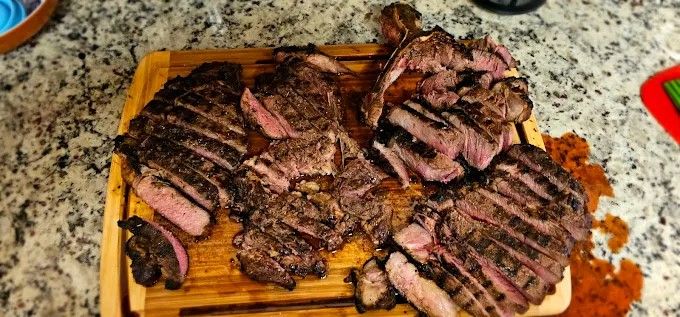
Most of a cut sheet is a list of yes and no. Do you want ribs, do you want fajitas, how thick do you want the steaks. The loin is different, because the two answers use the same meat.
What is actually on the bone
Run down the back of the animal and you find two muscles either side of the backbone: the loin, which becomes the New York strip, and underneath it the tenderloin, which becomes the filet. A T-bone is both of them left attached, with the piece of vertebra between them — that is the T.
So the choice is whether the bone stays. Leave it, and you get T-bones. Take the two muscles off it, and you get New York strips and a filet, cut separately. You cannot have T-bones and also have the filet, because the filet was the smaller half of the T-bone.
Why the shop asks it first
Every other steak choice sits downstream of it. Sirloin and ribeye come off a different part of the animal and you get them either way, so they are asked once. But the loin answer decides which steaks are even on the list. That is why the order planner asks the loin question at the top, and the steak list changes underneath it.
How to decide
A T-bone is one steak, cooked on the bone, and it feeds a person generously. Bone holds heat and many people cook better steaks on it. The trade is that you cannot portion the tenderloin on its own, and the bone counts toward the weight you paid for on the hanging weight.
Cut separately, you get New York strips and a filet that can go whole or be cut into steaks. Whole means a roast you can tie and cook for a table, or portion yourself later. It is the more flexible answer.
Steak thickness is asked once and applies to all of them: 3/4", 1", 1 1/4", or 1 1/2". Thicker steaks mean fewer of them out of the same beef.
Say it on the phone
You do not have to have this settled before you call — the shop asks the question. But knowing what it means saves the explanation. Read through the beef cut sheet first if you want the whole list, and call (979) 843-5211.
Questions